
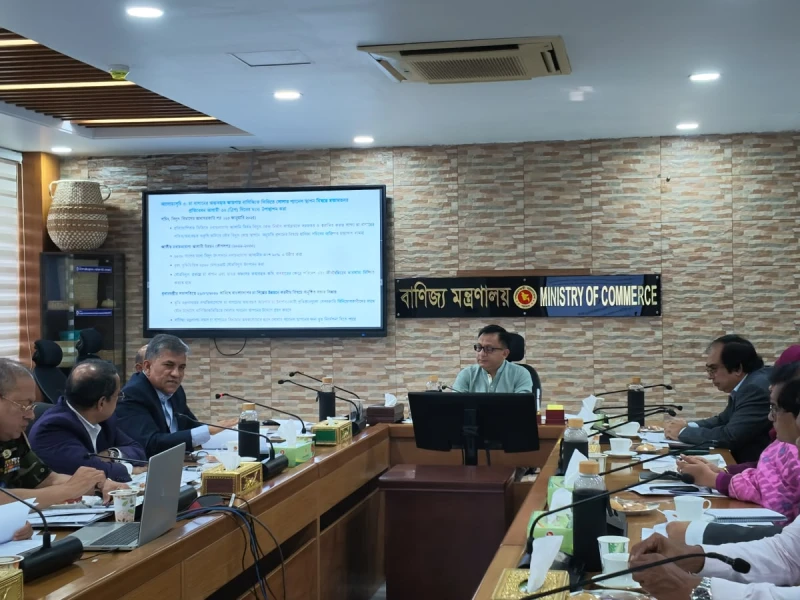
Commerce Minister Khandakar Abdul Muktadir has said the government will take all necessary steps, alongside a long-term plan, to restore the economic viability of the country's tea sector, stressing that the industry must move beyond dependence on loans and become a self-sustaining contributor to the national economy through regular revenue, tax and VAT payments.
Muktadir made the remarks while chairing the first meeting of an advisory committee formed to develop Bangladesh's tea industry, held at the Commerce Ministry conference room in the secretariat on Sunday.
The minister said a large number of workers' livelihoods are tied to the tea industry, and the closure or bankruptcy of any garden directly affects workers' families and local communities.
He said ensuring worker protection, environmental balance and national economic interest makes it essential to make the sector sustainable and profitable.
Noting that Bangladesh once exported tea but could turn import-dependent again if production is disrupted, he said a collective effort could help the sector overcome its crisis and regain a strong position.
The meeting proposed setting up solar power projects for a fixed period on fallow and unused land within tea gardens without compromising their core character, along with agriculture, alternative afforestation, and new income sources through clusters or net metering.
Speakers said implementing these initiatives would require policy approval from the land ministry and other relevant authorities.
Participants said legal traders face unequal competition and the government loses significant revenue due to illegal cross-border entry of tea and direct sales outside auctions.
While tea sells at Tk 290–300 per kg at auction, smuggled tea is being sold at Tk 200–220 per kg, they said, proposing stronger monitoring along with rationalising VAT and advance income tax.
The meeting also stressed that tea gardens should not rely solely on government incentives, revolving funds or loans, but must improve their own management efficiency and financial capacity.
Assurance was given that banking and policy support would be considered after reviewing garden-specific action plans.
 Prev Post :